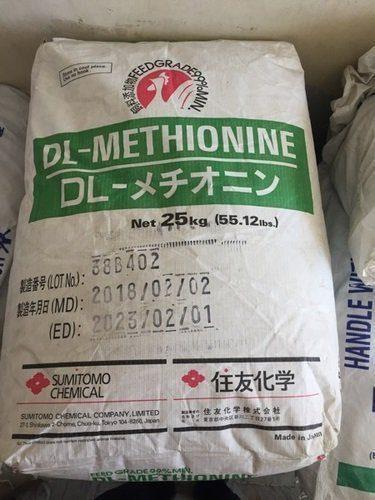
Feed Grade Methionine (For Livestock | 25kg)
V-NJH4Y · No reviews yet
Methionine is a sulfur-containing amino acid that is essential for good health and productivity in animals.
- It is indicated to keep young livestock healthy while moderating a variety of metabolic reactions, cell proliferation, and development in the body.
- Nutrient-dense rations help sharpen the focus on key essential amino acids such as lysine and methionine.
- As farmers often prefer finding supplements that can be customized to the diet of their pig to improve age, weight, genetics and production parameters. The maximization of feed, facility, and labour efficiencies are part of the daily equation.
- We deliver nationwide!
1024
501
Novi Agro
UNCATEGORIZED
₦ 240,000
Product description
Feed Grade Methionine
Feed grade methionine is an essential amino acid that acts as the substrate for other amino acids such as cysteine and taurine, versatile compounds, and the antioxidant glutathione.
- Supplementing feeds with methionine offer a safety net for productivity and added cost savings.
- Methionine exists as the D-methionine and L-methionine forms. While there is no difference in the chemical make-up of the two isomers, the configurations of the molecules differ.
- Commercial methionine and methionine hydroxy analogue produced by chemical synthesis produces both D- and L-methionine in an equal parts mixture. Commercial methionine produced by fermentation results in only the L-isomer.
Why Feed Grade Methionine Matters
Even with supplementation, it's critical to ensure a balance. If one amino acid is lacking then the animal cannot synthesize additional protein. This leads to inefficient use of the feed's nutrients, slower growth, reduced lean-muscle production and ultimately, economic loss. Lysine typically comes to mind as the first limiting amino acid in swine diets, but that is dependent on the age of pigs and type of diet. While lysine may be the first limiting amino acid for older pigs, methionine often moves into that spot for younger pigs depending on the ingredient composition of the diet. Numerous studies have shown this is particularly true in weaned-pig diets that contain high levels of spray-dried blood products or dried whey
Benefits of methionine
- Enhancing protein synthesis.
- Reducing cost by increasing feed efficiency.
- Alleviating the negative effects of stress.
- Acting as a precursor in metabolic pathways.
- The growing period is characterized by significant dietary demands requiring high energy and feed intake, thorough nutrient digestion and absorption, and efficient feed conversion.
- The unique chemical structure of methionine, as well as its organic acid benefits of improved gut health and nutrient digestibility, helps produce measurable results in poultry.
- Methionine supplementation of livestock diet improves splanchnic metabolism, gastrointestinal tract development as well as the growth performance of young broiler chicks.
- The functional role of methionine in the gastrointestinal tract, especially its antioxidative effects, enables it to improve the health of the gastrointestinal tract of rapidly growing animals.
- Therefore, methionine confers a positive growth impact.
Highlights
Shipping
Local pick-up2 – 4 days
Office pick-up3 days
Product description
Feed Grade Methionine
Feed grade methionine is an essential amino acid that acts as the substrate for other amino acids such as cysteine and taurine, versatile compounds, and the antioxidant glutathione.
- Supplementing feeds with methionine offer a safety net for productivity and added cost savings.
- Methionine exists as the D-methionine and L-methionine forms. While there is no difference in the chemical make-up of the two isomers, the configurations of the molecules differ.
- Commercial methionine and methionine hydroxy analogue produced by chemical synthesis produces both D- and L-methionine in an equal parts mixture. Commercial methionine produced by fermentation results in only the L-isomer.
Why Feed Grade Methionine Matters
Even with supplementation, it's critical to ensure a balance. If one amino acid is lacking then the animal cannot synthesize additional protein. This leads to inefficient use of the feed's nutrients, slower growth, reduced lean-muscle production and ultimately, economic loss. Lysine typically comes to mind as the first limiting amino acid in swine diets, but that is dependent on the age of pigs and type of diet. While lysine may be the first limiting amino acid for older pigs, methionine often moves into that spot for younger pigs depending on the ingredient composition of the diet. Numerous studies have shown this is particularly true in weaned-pig diets that contain high levels of spray-dried blood products or dried whey
Benefits of methionine
- Enhancing protein synthesis.
- Reducing cost by increasing feed efficiency.
- Alleviating the negative effects of stress.
- Acting as a precursor in metabolic pathways.
- The growing period is characterized by significant dietary demands requiring high energy and feed intake, thorough nutrient digestion and absorption, and efficient feed conversion.
- The unique chemical structure of methionine, as well as its organic acid benefits of improved gut health and nutrient digestibility, helps produce measurable results in poultry.
- Methionine supplementation of livestock diet improves splanchnic metabolism, gastrointestinal tract development as well as the growth performance of young broiler chicks.
- The functional role of methionine in the gastrointestinal tract, especially its antioxidative effects, enables it to improve the health of the gastrointestinal tract of rapidly growing animals.
- Therefore, methionine confers a positive growth impact.
Highlights
Shipping
Local pick-up2 – 4 days
Office pick-up3 days