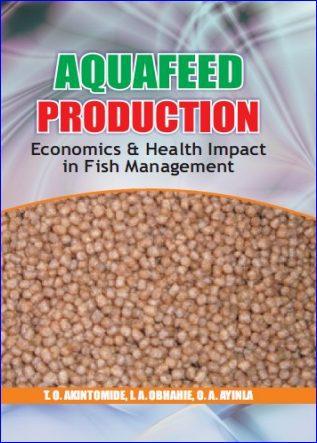
Aquafeed Production, Economics and Health Impact in Fish Management
V-XSF6B · No reviews yet
The book will profoundly assist practicing and prospective fish farmers in running viable aquaculture ventures.
- It will greatly help students in aquaculture related studies.
- It is written as a compendium to enhance the farming of fish for national growth.
2763
UNCATEGORIZED
UNCATEGORIZED
₦ 9,000
Product description
You probably know that there are four basic requirements in producing healthy fish. These are:
- Good fish seed from a good source
- Quality feed
- Adequate culture facilities and
- A healthy environment (water)
Being aware of the fact that over 70% of most farms' recurrent expenditure is expended on feeding fish that are intensively produced, this piece is fashioned towards exploring various economic means of feeding fish, incorporating some useful, cost-effective agricultural/industrial products, by-products, and wastes as feed materials, without compromising the standard.
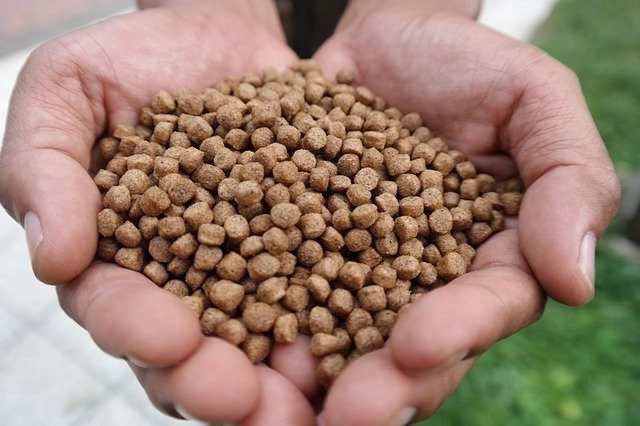
70% of recurrent expenditure is on feeding. You need to get it right (quality and inexpensive)
Included in the text are -
- Fish dietary requirements
- Detailed highlights of what it takes to produce quality fish diets from a combination of conventional and (cheap, commonly overlooked) waste materials
- Feed economics and management
- Fish feeding tech
- Feed production analysis
- Field feed assessment techniques
- Proper aquafeed management
- Fish feeding techniques
- Waste management and utilization techniques
- System management as it relates to feed intake
- And much more
As you know, good farming should be targeted at maximizing production through the use of cheap but high-quality, economic feeds; commercial feed assessment and selection; adequate feed management and economic utilization ...., all channeled at ensuring low feed conversion ratio (FCR) and good business returns. However, the implication of each step taken in ensuring this goal must be well understood in order not to complicate issues.
You need to know why, how and when to introduce, adjust or change a feed.

Aquafeed Production, Economics & Health Impact In Fish Management is a book written by the authors as an update to the first edition – Fish Nutrition & the Economic Way to Feeding Fish‘.
Please enjoy and reap the fruit of this work as you discover the "golden eggs" for your farm, feed mill or general study.
Authors
T . O . A k i n t o m i d e
(Ph.D. Vet. Medicine, UI, Nig.)
He had his first, second & third degrees in Veterinary Medicine, University of Ibadan, Nigeria. His area of specialty is in livestock (fish, snail & chicken) production & health management. He has authored more than 12 books, outside academic publications.
Highlights
Shipping
Local pick-up2 – 4 days
Office pick-up3 days
Product description
You probably know that there are four basic requirements in producing healthy fish. These are:
- Good fish seed from a good source
- Quality feed
- Adequate culture facilities and
- A healthy environment (water)
Being aware of the fact that over 70% of most farms' recurrent expenditure is expended on feeding fish that are intensively produced, this piece is fashioned towards exploring various economic means of feeding fish, incorporating some useful, cost-effective agricultural/industrial products, by-products, and wastes as feed materials, without compromising the standard.
70% of recurrent expenditure is on feeding. You need to get it right (quality and inexpensive)
Included in the text are -
- Fish dietary requirements
- Detailed highlights of what it takes to produce quality fish diets from a combination of conventional and (cheap, commonly overlooked) waste materials
- Feed economics and management
- Fish feeding tech
- Feed production analysis
- Field feed assessment techniques
- Proper aquafeed management
- Fish feeding techniques
- Waste management and utilization techniques
- System management as it relates to feed intake
- And much more
As you know, good farming should be targeted at maximizing production through the use of cheap but high-quality, economic feeds; commercial feed assessment and selection; adequate feed management and economic utilization ...., all channeled at ensuring low feed conversion ratio (FCR) and good business returns. However, the implication of each step taken in ensuring this goal must be well understood in order not to complicate issues.
You need to know why, how and when to introduce, adjust or change a feed.
Aquafeed Production, Economics & Health Impact In Fish Management is a book written by the authors as an update to the first edition – Fish Nutrition & the Economic Way to Feeding Fish‘.
Please enjoy and reap the fruit of this work as you discover the "golden eggs" for your farm, feed mill or general study.
Authors
T . O . A k i n t o m i d e
(Ph.D. Vet. Medicine, UI, Nig.)
He had his first, second & third degrees in Veterinary Medicine, University of Ibadan, Nigeria. His area of specialty is in livestock (fish, snail & chicken) production & health management. He has authored more than 12 books, outside academic publications.
Highlights
Shipping
Local pick-up2 – 4 days
Office pick-up3 days