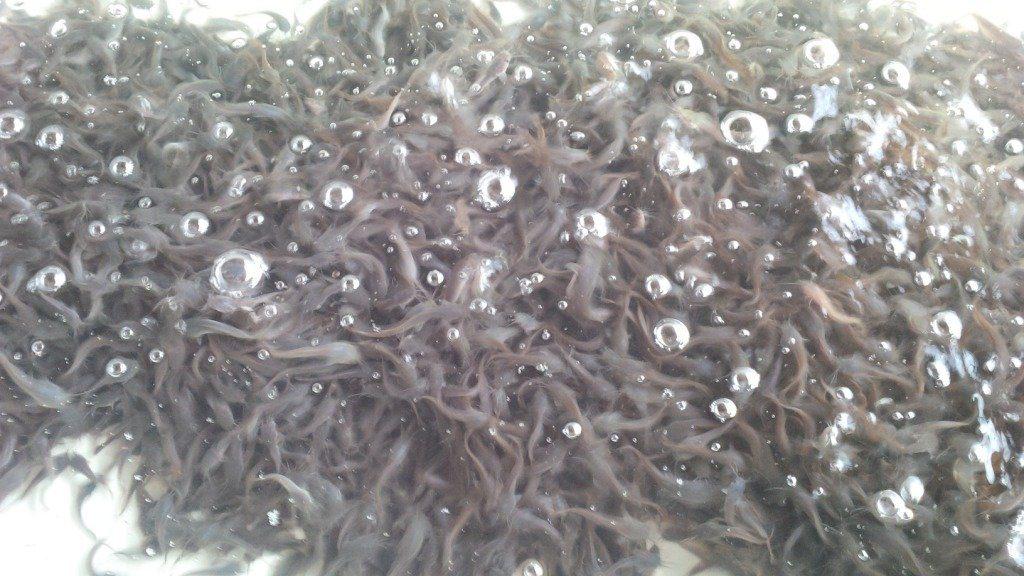
Fingerlings Fishes | 4 - 5cm Long
V-X2BZK · No reviews yet
Fingerlings Fishes are available for further domestication on your farm. We package and deliver to every state in Nigeria. The fingerlings come in 4-5cm.
Get a quote now.
816
UNCATEGORIZED
UNCATEGORIZED
₦ 0
Product description
Rearing fingerlings fishes involves nurturing 3–4 day-old postlarvae, which have begun to eat food, into fingerlings for pond stocking. Rearing is generally divided into two stages. First, fry is cultured for 18–25 days until they become juvenile fish about 3 cm long; these are known as summerlings. Second, summer-lings are reared for another 3–5 months until they become fingerlings with a body length of 8–20 cm. Most “grow-out” ponds are stocked with such fingerlings and some are stocked with 2-year-old fingerlings fishes.
Fingerlings and especially fry are delicate and small, and their power of movement and ability to feed is weak. Their diet is restricted, they have low environmental adaptability, and they are vulnerable to predators. In addition, they have a high metabolic rate. Rearing should be carefully managed to maximize survival rate and produce healthy, well-developed fingerlings.
Fish grow quickly during the fry and fingerlings stages and during these stages, they have different biological characteristics from adults, especially in terms of feeding habits, growth, and habitat preference.
Food Intake
The changes in feeding organs, feeding patterns, and food composition of fry and fingerlings have already been reviewed. Diet feedstuffs of animals are considered to be of the utmost importance for rearing fingerlings because of their high metabolic rate, fast growth, and food intake. All of these rates decline as the bodyweight increases. Food intake varies with the type of food and the water temperature. At optimum temperature, the maximum daily food intake of grass carp fingerlings is 49.9 per cent of body weight; for silver carp and bighead 16.8 and 16.4 per cent, respectively. The daily food intake of juvenile grass carp is 32 to 71 per cent of body weight and they show maximum food intake from 0800 to 1600 hrs; this decreases sharply in the evening. The maximum food intakes of silver carp and bighead fingerlings are between 1200 and 2000 hrs, declining after 2000 hrs. Silver carp and bighead stop eating between 2400 hrs and 0600 hrs and the intensity of food intake increases significantly after 0800 hrs.
The retention time of food in the gut by fry and fingerlings is related to water temperature. Rotifera and daphnia (Bosmina longirostris) fed to grass carp fry and fingerlings remain in the gut for 0.5–3.3 h at a water temperature of 20–22°C; when the water temperature reaches 30–32°C, food is digested in less than 1 h. Silver carp digest food in 1.3 h at a water temperature of 22–26°C and within 1 h at a water temperature of 30°C.
Growth Rate
Various species have different growth rates. Even the same species show different growth rates at different developmental stages. Black carp, grass carp, silver carp and bighead fry and fingerlings all have high growth rates. Maximum growth rates occur as fry develops into summerlings; the daily growth rate is 15–25 per cent in length and 30–57 per cent in weight. In the first 10 days after stocking, the bodyweight of bighead and silver carp fry increase by 5 and 6 times respectively. On average, bodyweight doubles every 2 days. However, because these fish are small, the absolute increase in weight is rather low. The average daily increase in body weight is between 10 and 20 mg and the average daily increase in body length is 0.7 mm for bighead and 1.2 mm for silver carp
Highlights
Shipping
Local pick-up2 – 4 days
Office pick-up3 days
Product description
Rearing fingerlings fishes involves nurturing 3–4 day-old postlarvae, which have begun to eat food, into fingerlings for pond stocking. Rearing is generally divided into two stages. First, fry is cultured for 18–25 days until they become juvenile fish about 3 cm long; these are known as summerlings. Second, summer-lings are reared for another 3–5 months until they become fingerlings with a body length of 8–20 cm. Most “grow-out” ponds are stocked with such fingerlings and some are stocked with 2-year-old fingerlings fishes.
Fingerlings and especially fry are delicate and small, and their power of movement and ability to feed is weak. Their diet is restricted, they have low environmental adaptability, and they are vulnerable to predators. In addition, they have a high metabolic rate. Rearing should be carefully managed to maximize survival rate and produce healthy, well-developed fingerlings.
Fish grow quickly during the fry and fingerlings stages and during these stages, they have different biological characteristics from adults, especially in terms of feeding habits, growth, and habitat preference.
Food Intake
The changes in feeding organs, feeding patterns, and food composition of fry and fingerlings have already been reviewed. Diet feedstuffs of animals are considered to be of the utmost importance for rearing fingerlings because of their high metabolic rate, fast growth, and food intake. All of these rates decline as the bodyweight increases. Food intake varies with the type of food and the water temperature. At optimum temperature, the maximum daily food intake of grass carp fingerlings is 49.9 per cent of body weight; for silver carp and bighead 16.8 and 16.4 per cent, respectively. The daily food intake of juvenile grass carp is 32 to 71 per cent of body weight and they show maximum food intake from 0800 to 1600 hrs; this decreases sharply in the evening. The maximum food intakes of silver carp and bighead fingerlings are between 1200 and 2000 hrs, declining after 2000 hrs. Silver carp and bighead stop eating between 2400 hrs and 0600 hrs and the intensity of food intake increases significantly after 0800 hrs.
The retention time of food in the gut by fry and fingerlings is related to water temperature. Rotifera and daphnia (Bosmina longirostris) fed to grass carp fry and fingerlings remain in the gut for 0.5–3.3 h at a water temperature of 20–22°C; when the water temperature reaches 30–32°C, food is digested in less than 1 h. Silver carp digest food in 1.3 h at a water temperature of 22–26°C and within 1 h at a water temperature of 30°C.
Growth Rate
Various species have different growth rates. Even the same species show different growth rates at different developmental stages. Black carp, grass carp, silver carp and bighead fry and fingerlings all have high growth rates. Maximum growth rates occur as fry develops into summerlings; the daily growth rate is 15–25 per cent in length and 30–57 per cent in weight. In the first 10 days after stocking, the bodyweight of bighead and silver carp fry increase by 5 and 6 times respectively. On average, bodyweight doubles every 2 days. However, because these fish are small, the absolute increase in weight is rather low. The average daily increase in body weight is between 10 and 20 mg and the average daily increase in body length is 0.7 mm for bighead and 1.2 mm for silver carp
Highlights
Shipping
Local pick-up2 – 4 days
Office pick-up3 days